The Top 3 Things You Need to Do to Successfully Execute a Language Access Program

title - The Top 3 Things You Need to Do to Successfully Execute a Language Access Program

Did you know that nearly 68 million US residents face language barriers in everyday communication? Successful language access programs bridge this gap so that no one is left unheard, but organizing and coordinating such programs effectively remains a daunting task for many organizations. This can lead to fragmented services and unmet needs.

To execute a language access program, you need 3 main ingredients: a plan, a person in charge of the plan, and access to language services and resources.

Here’s how to use these components to turn your language access program into a powerful tool for inclusivity and effective communication.

1) A language access plan

All successful language access programs begin with a language access plan that details how language services will be provided across various touchpoints. This plan is the foundation of your program and serves as a roadmap to effective communication.

A strong language access plan includes:

  • The languages spoken by your community
  • The specific services required, such as interpretation and translation
  • How you will access the required resources and provide the services
  • Clear roles and responsibilities within your organization
  • Regular evaluations and updates to keep the plan relevant

For more details on how to set up an effective access plan, download our eBook.

2) A language access coordinator

A language access plan is a good start, but it’s not enough to guarantee success. You also need a person to be in charge of implementing the plan. When making sure everyone has access to communication help is everybody’s job, it can all too easily become nobody’s priority.  If you’re trying to manage without assigning it to one owner, you’re likely struggling with scattered responsibilities, confusion about who to turn to for language-related matters, and communication breakdowns. This is not only inefficient, but it also creates a poor experience for clients who need help.

Enter the language access coordinator, the glue that holds your language access program together. A language access coordinator is in charge of:

  • Executing your plan, including making sure the budget is allocated efficiently and monitoring its effectiveness.
  • Advocating for language access across your organization and answering everyone’s questions.
  • Managing and tracking language access requests.
  • Training the rest of the team and advocating for the importance of language access.
  • Ensuring compliance with federal and state regulations.
  • Making sure your community gets the support it needs.

Without a language coordinator, language access becomes “extra work” added to someone else’s workday. That’s a recipe for overwhelmed personnel, an under-resourced and poorly managed language access program, and community needs that go unmet.

Do you need a full-time language access coordinator?

Whether or not you need a full-time language access coordinator depends on the size and scope of your language access program. It’s fine to hire someone part-time or to have someone else in your organization take on the role part-time if your program is small, as long as they have the time and support they need to handle the additional responsibilities. Just keep in mind that as your language requirements grow, the role of your language coordinator may need to grow, as well.

3) Access to language services and resources

While having a well-structured language access plan and a dedicated language access coordinator are crucial, they can’t work effectively without the right tools and resources. Access to language services and resources forms the third essential component of your language access program.

Here are the most important resources and services you’ll need for a successful program:

Qualified interpreters and translators

These are the language experts who bridge communication gaps at every touchpoint. Be sure you have a roster of qualified interpreters and translators who can assist when needed. Quality matters here, as accurate communication is key.

Pro tip: You don’t have to struggle to source interpreters and translators for all of the different languages in your community. Partner with a language solutions provider like Mindlink to tap into their network of vetted professionals!

Language assistance technology

People are the backbone of any language access program, but technology also has a vital role to play. This can include technology to handle language access requests and technology to connect people in your community who need language assistance with interpreters.

We recommend using a portal to submit and track language access requests. It streamlines the process and makes it easy for staff and community members to request language assistance when needed. With a portal, requests are logged efficiently and tracked. Project management features keep everything in one place, and real-time notifications keep everyone involved in the loop.

Local, in-person interpreters are preferable, but when that’s not an option, technology can also support your language access program by directly connecting remote interpreters and people who need help. For example, over-the-phone interpreting (OPI) and video remote interpreting (VRI) allow for quick access to language assistance, even in situations where an on-site interpreter might not be feasible.

Set your language access plan in motion

Your language access plan lays the groundwork for effective communication. A language access coordinator and the appropriate language services bring that plan to life, smashing through language barriers to make sure everyone in your community has the support they need.

With the right plan, the right person, and the right resources, your language access program can truly make a difference. At Mindlink, we’re here to help you set up a language access program that works. We can help you craft a tailored plan and provide the necessary resources to serve your diverse community. Contact us today to get started!

Language Access: A Catalyst for DEI in 2024 

As businesses plan for the coming year, diversity, equity, and inclusion (DEI) initiatives remain a hot topic. When you think of DEI, unbiased hiring practices and awareness and sensitivity training are probably the first things that come to mind. But language access – providing materials in the language of your stakeholders – is also crucial to any effort to promote inclusion. 

As with any DEI initiative, planning is essential for an effective language access program. When your organization is reactive, responding to requests as they come in, people who need language help experience delays or less-than-optimal experiences. If they’re your employees, they won’t feel heard or valued. If they’re your clients, they may have limited access to your organization’s services or be unable to access them at all.  

Investing in a strategy now results in better outcomes for everyone and can save time and money down the road. In this article, we’ll cover: 

  • what’s changed over the past year when it comes to DEI 
  • why DEI principles remain essential, and  
  • how to create language access strategies that foster inclusion inside and outside your organization.  

The Changing Landscape of DEI  

The legal landscape around DEI initiatives has shifted over the past year. For example, several states have passed laws banning some elements of DEI programs (like curriculum) in specific settings (like education).  

Despite this, diversity and inclusion remain important to employees and consumers. For example, a 2023 survey found that 78% of potential employees would not consider working for a company that wasn’t committed to DEI initiatives. Among consumers, 67% say it’s important for organizations

to promote diversity and inclusion.  

The bottom line? It’s vital to foster an inclusive environment in your organization in 2024. Here’s how a language access plan can help.  

How Language Access Helps with Employee DEI 

Organizations must provide language access to employees in order to comply with relevant laws and regulations in many places. But that’s not the only reason to create an internal language access program. It also helps multicultural employees feel like they belong in your organization (inclusivity). They feel valued and supported when they can easily access training, benefits information, and other essential resources in their preferred language. Also, employees retain more of what they hear and learn in a work setting (equity) and that benefits both the business and their careers…supporting and elevating multicultural people in the workplace.   

Another benefit: language access efforts can help attract a more diverse workforce.  

How Language Access Aids Client DEI    

Language access promotes inclusivity and equity by making it possible for all clients and patients to access the services they need. For example, in healthcare settings, language barriers can prevent patients from getting needed medical care and make navigating the health insurance system difficult.  

Language barriers can also make clients feel left out and sidelined. It’s disorienting to be in a situation where you need assistance but can’t understand what the people around you are saying. Breaking down these barriers is the first step to inclusion.  

Getting Started with a Language Access Plan 

With a language access plan in place, you’ll be prepared to welcome diverse team members and clients alike. Here’s how to get started:  

1. Identify Gaps 

Ask yourself the following questions to identify gaps in your current policies and procedures.  

For employees: How easily can multilingual employees get materials in their native language? Do you have translated versions of important documents available? Do you have an efficient process in place for dealing with translation requests? Do employees have access to interpreters when needed? Are you providing interpretation for things such as ‘all-hands’ meetings?  

For clients: Have you recently failed at providing meaningful access for your service to a client due to a language barrier? If you have a system for providing language access, do your clients know about it? Do they know how to access the help? How can you offer more culturally sensitive services? What languages are most commonly requested? 

2. Design an outreach strategy 

For employees: Is it easy for employees to access information in their native languages in a timely fashion?  Are you proactively translating important documents so that multilingual employees can access the same information at the same time as employees who prefer English? Does everyone know how to request translation and interpretation services? 

For clients: If you have a system for providing language access, do your clients know about it? Do they know how to access the help? For client outreach, consider taking the following steps:  

  • Post signs (in English and in other commonly spoken languages in your area) offering access to language services.  
  • Post information about your language access policy on your website.  
  • Mail postcards to existing clients to make sure they are aware of your offerings.  

3. Identify documents for translation 

For employees: Consider translating the following:  

  • Employee handbook 
  • Health and safety manuals 
  • Training materials 
  • Company policies  
  • Benefits information  
  • HR forms and documents 
  • Internal communications 
  • Legal documents 
  • Anything else employees need to fully participate in your organization 

For clients: Translate intake forms, applications, and any other vital documents your customers will need to use your services into the most commonly spoken languages you encounter and create a plan to handle language access requests for less widely requested languages. 

Consider translating your website and marketing materials as well.  

Whether the material you’re translating is internal or client-facing, it helps to have relationships with professional translators or agencies who can provide translation as requested. (We can help with this one!) 

4. Implement a process for scheduling qualified interpreters 

For employees: Interpreters should be available for key training sessions and important meetings. Your employees will be better able to access the information provided when it’s presented in their native language.  

For clients: Interpreters should be available for in-person appointments and phone calls.  

In both cases, pre-existing agreements with professional interpreters or agencies will make it easier for you to provide these services.  Know their policies (i.e. costs, minimums) before you start so cost isn’t a barrier. Make sure everyone in your organization knows how to request an in-person interpreter when needed, as well as the phone number to connect to a language access line. (We’ve got your back on this one, too!) 

5. Track your progress.  

Once you’ve put a language access plan into place, track your progress to make sure you’re achieving the desired outcomes.  

Inclusion is worth it…and language access plays a critical part 

A successful language access program is worth celebrating. It benefits your organization and your clients in several ways. Internally, diversity drives innovation and creativity and helps organizations make wiser decisions.    

For clients, language access isn’t only about inclusion; it also promotes equity. It’s a crucial part of providing meaningful access to services and improving outcomes in many different situations. For organizations in the healthcare space, proving language access increases health literacy among multilingual clients, helps address health disparities, and can even save lives.  

Supercharge your DEI strategy with a language access plan  

Language access is at the foundation of a genuinely welcoming, equitable society. Now is the time to plan for a more unbiased, diverse, and inclusive 2024.   

You don’t have to do it alone. Contact us to see how we can help you plan to build a diverse team and serve your multilingual, multicultural community! 

How to Set a Budget for Language Access Services

language-access-budgeting

One of the first steps in providing your community with the language access services they need is to figure out how much it will cost.

And that means getting an accurate understanding of costs so you can present a budget and get it approved.

In this blog post we’ll walk you through the process of scoping your language access requirements. 

Determine the languages you’ll need to support

First, you have to identify the people whom your organization serves who need assistance with language. Urban areas have greater diversity with immigrant and refugee communities, which means a wider range of spoken languages. For example, in New York City alone, over 200 languages are spoken. On the other hand, suburban and rural areas generally have fewer languages to consider.

Make a list of the language you need to cover and the approximate number of people per language who might need services from your organization. 

Here are some resources for you:

These can get you big-picture information, but your requirements may vary. For local specifics, you can:

  • Conduct a community survey to gain a comprehensive understanding of the specific language needs within your community.
  • Tap into useful internal data sources such as call center information, information provided by those requiring your services, and electronic health records.

Figure out touchpoints

People with varying levels of English proficiency will need language services at different times and in different ways during their interactions with your organization. You’ll need to assess where people interact with your organization and determine what kind of language services would be appropriate at each point of contact.

You can make a chart like the example below:

TouchpointLanguage access service
Scheduling services, call centers, hotlines, or information linesInterpretation Translation (call center scripts)
Reception area (checking in for an appointment)Translation (forms and signage)
PaperworkTranslation (applications, forms)
Online materials, like websitesTranslation
Outreach programs; community eventsInterpretation
Advertising or informational materialsTranslation (brochures)
In-person or phone appointmentsInterpretation

Defining the scope of language services for your organization

Two types of services are usually involved in language access: translation and interpretation. You will probably need to offer both. Let’s take a quick look at what each of these services entails and how you would price each.

Interpretation

In this service, professional bilingual interpreters convert speech from one language to another. Interpretation comes into play whenever a non-native speaker meets with a service provider such as a lawyer, a doctor, a teacher, or a banker in person or on the phone.

You need to decide the type of interpretation you want to offer. Often, organizations use a combination of approaches to providing interpretation services.

The most common types of interpretation are:

  • Over-the-phone interpretation (OPI)
  • Video remote interpretation (VRI)
  • In-person

Determine how many hours per month each type of service will be required.

To figure out whether to staff or outsource interpretation ask yourself these questions:

  • Do you have enough volume that it makes sense to hire a bilingual nurse, receptionist, or case worker? And how much would that cost?  This works if your population is mainly only 1 language.
  • Do you have so many languages to represent that the only feasible option is to partner with an agency?
  • Or can you outsource jobs to interpreters on your own for a limited number of languages?

For each language, find out the costs of:

  • freelance interpreters in each language (often hourly, per session, or by full/half day). A service provider such as MindLink can help you work through these costs.
  • a full-time bilingual practitioner to do the job you require plus provide language skills

The pricing of interpretation services varies depending on several factors, including:

  • Type of interpretation: In-person interpretation is typically the most expensive option, followed by video remote interpretation (VRI) and telephone interpreting (TI).
  • Length of the interpretation: The longer the interpretation, the higher the cost.
  • Language pair: Some language pairs are more common and therefore have lower rates than others.
  • Experience of the interpreter: More experienced interpreters typically charge higher rates.
  • Location: Interpreters who work in high-demand areas, such as major cities or hospitals, may charge higher rates.
  • Urgency: Interpreters who are available on short notice may charge a higher rate.

In person interpretation is usually charged by the hour, and VRI by the minute.

There may be additional fees for:

  • Travel: If the interpreter needs to travel to the interpretation location, there will be a travel fee.
  • Equipment: If the interpreter needs to provide equipment, such as a headset or a video conferencing system, there may be an equipment rental fee.
  • Taxes: There may be taxes added to the base rate and any additional fees.

Translation

Translation focuses on written communication. In translation, a professional linguist converts a text from one language into another. It is often thought of as a one-to-one exchange from one language to another, a literal transfer of meaning from one language to the next.

To figure out what documents to translate, organizations should consider which documents are “vital” documents, or those that “contain information that is critical for obtaining services and/or benefits.” Vital documents may include:

  • Application forms, including those for benefits
  • Consent forms, including consent to treat, release of information, or consent to immunize
  • Complaint forms
  • Legal forms
  • Eligibility forms
  • Financial payment policies
  • Patient rights and responsibilities
  • Signage, notices
  • Intake/information forms
  • Patient instructions

As an organization you must decide based on the importance of the content or event, based on your budget, and based on the law, which points of contact you will provide language services for.

Typically, the pricing for translation is by the word, with additional fees for file prep, engineering, desktop publishing, and project management.

Putting it all together

Once you’ve answered the above questions, your best bet is to engage a language services provider who can assess your needs and quote you the total costs for translation and interpreting services. A provider can help you identify cost efficiencies, tools to use, and ideal resources for your program.  Connect with us here to talk through your language access scope.

Once you have your budget understood and approved, you’re on your way to providing timely and helpful language services to those in your community whose English isn’t proficient.

Six Reasons Why You Need a Portal to Help You Manage Language Access Requests 

why you need a portal

Every person, regardless of language or background, deserves to be heard and understood. Behind every request for language services is a person seeking clarity, understanding, and connection. Yet, for language access coordinators (or anyone else in charge of arranging language assistance) managing these requests can be overwhelming.  

For example, coordinators may receive a flurry of new requests daily. Some are urgent, while others demand specialized linguistic skills that are scarce. 

The inherent unpredictability and variety make meeting these requests a huge challenge, especially at scale. The good news: there is a solution. A language access portal can make this process more efficient and methodical. Here are six reasons why you need a portal to help you coordinate language access.  

scheduling for language access

Get streamlined scheduling when you need to schedule a translator or interpreter  

Using multiple tools like email, spreadsheets, and phone calls to scheduling language access requests can be chaos – hard to track and follow. A dedicated online portal offers a streamlined solution.  

It provides a clear overview of all requests and assignments, so you can get all the information you need at a glance. Automated alerts keep everything on track, instantly notifying coordinators of potential conflicts or upcoming tasks. The result is a more efficient, error-free scheduling process that is adaptable to sudden changes or urgent needs.   

Get access to a global network to find the right linguist every time 

Finding the perfect linguist for every task can be challenging. One day, you might need a Spanish interpreter. The next day, it might be a dialect few people in your area have heard of. You may also need an interpreter who specializes in a particular field, like medical interpreting or legal translation. It’s simply not possible to find the right people on social media or by web searches.   

Look for a language access portal that gives you access to a global network of linguists right at your fingertips. Just pick your language, find your expert, and voilà – job scheduled. With this tool, matching the right person to the right project is a piece of cake.  

Get unified project management to ditch the chaos 

Coordinators need a clear, simple way to see everything in one spot. 

An online portal does just that. Look for one that acts as a one-stop shop for all project details, from linguist info to deadlines. No more toggling between apps or combing through email threads. Everything’s organized, accessible, and centralized.  

Stay in the loop with real-time updates and notifications 

Keeping track of ongoing projects and their many status changes can feel like a complex juggling act. If you aren’t alerted to those changes, you might find yourself unable to provide the service your multilingual customers or clients expect. 

collaborating together on a schedule

With a dedicated portal, this becomes a thing of the past. Instead, you stay informed with real-time status updates and notifications. Whether a project is starting, nearing completion, or something has changed, you’re instantly alerted and can take action if needed. This means no more constant checking or guesswork, just timely information delivered straight to you so that you’re always on top of things. 

Communicate instantly with chat features 

Delayed or incomplete communication can derail even the best-laid plans. 

A language access portal can solve this problem, too. Look for a solution that has built-in messaging features. With built-in messaging, you can chat directly with linguists, schedulers, and anyone else involved. A chat feature offers straight-up, efficient, instant communication, ensuring everyone’s on the same page. 

Protect your data with robust security 

Data protection is crucial, especially when it comes to sensitive or protected consumer data. With so much at stake, you need a system that prioritizes security. 

A reliable portal ensures your data – from project details to personal communications – is safeguarded. With built-in security features, you can be confident that the information is stored safely, allowing you to focus on providing language assistance to everyone who needs it, without any added worry. 

Introducing LinguistLink 

Enter LinguistLink, an online job portal designed to bring order to language access chaos.  It’s like having a magic wand for scheduling, connecting with top-notch linguists from around the world, and keeping all your projects in order. The portal gives organizations a simple way to locate linguists, schedule work, and monitor project progress. 

Manage language access requests at scale without juggling multiple tools or manually tracking budgets. With LinguistLink, everything is in one intuitive space. From scheduling to invoicing, from budgeting to vendor management, it streamlines the entire workflow. Organizations can customize work request forms to make sure all pertinent details get captured. And if you already have trusted suppliers or vendors, you can bring them into the LinguistLink system.  

While LinguistLink does have self-service options, our Mindlink project manager is on hand to provide a human touch when needed. With the help of an experienced human scheduler, you’ll get matched with the right linguist for every job and you’ll have backup in the event of a last-minute schedule change or cancellation. 

Here’s how it works: Clients submit their translation or interpretation requests. Then, our project manager takes over. They match the task with the right linguist, handle customer service inquiries, and keep the logistics flowing smoothly. 

With LinguistLink, everything you need is right at your fingertips. It’s organized, efficient, and effective. 

Elevate your language access coordination with the right tools 

Language access is about more than just checking a box or complying with language access law. It’s about upholding fundamental human rights and building a more inclusive society. But it doesn’t have to be difficult.  

Using a language access portal is your ticket off the roller coaster of managing language access requests. Stop trying to cobble together a system with Outlook or spreadsheets or Post-it notes. And stop hunting and pecking for resources on the Internet. With LinguistLink, everything you need is right at your fingertips 

If you’re ready to make your life easier, don’t hesitate to reach out. Contact us and see how we can help you better serve your multilingual community! 

Is your Language Access Program Mature Enough to Meet Your Community’s Needs?

About 8% of the U.S. population, or 26.7 million people, are not native speakers of English and have limited English proficiency (LEP).

Language access – providing translation and interpretation services so this population can access the services they need – helps these members of our community to work, learn, receive care, and thrive in our community.

If you are a legal, financial, medical, governmental, educational, or non-profit organization serving the public then you need an effective language access program so your organization will have the tools it needs to serve the LEP people in your community. Also, a language access program will help you make sure you are in compliance with regulations like Title VI of the Civil Rights Act of 1964.

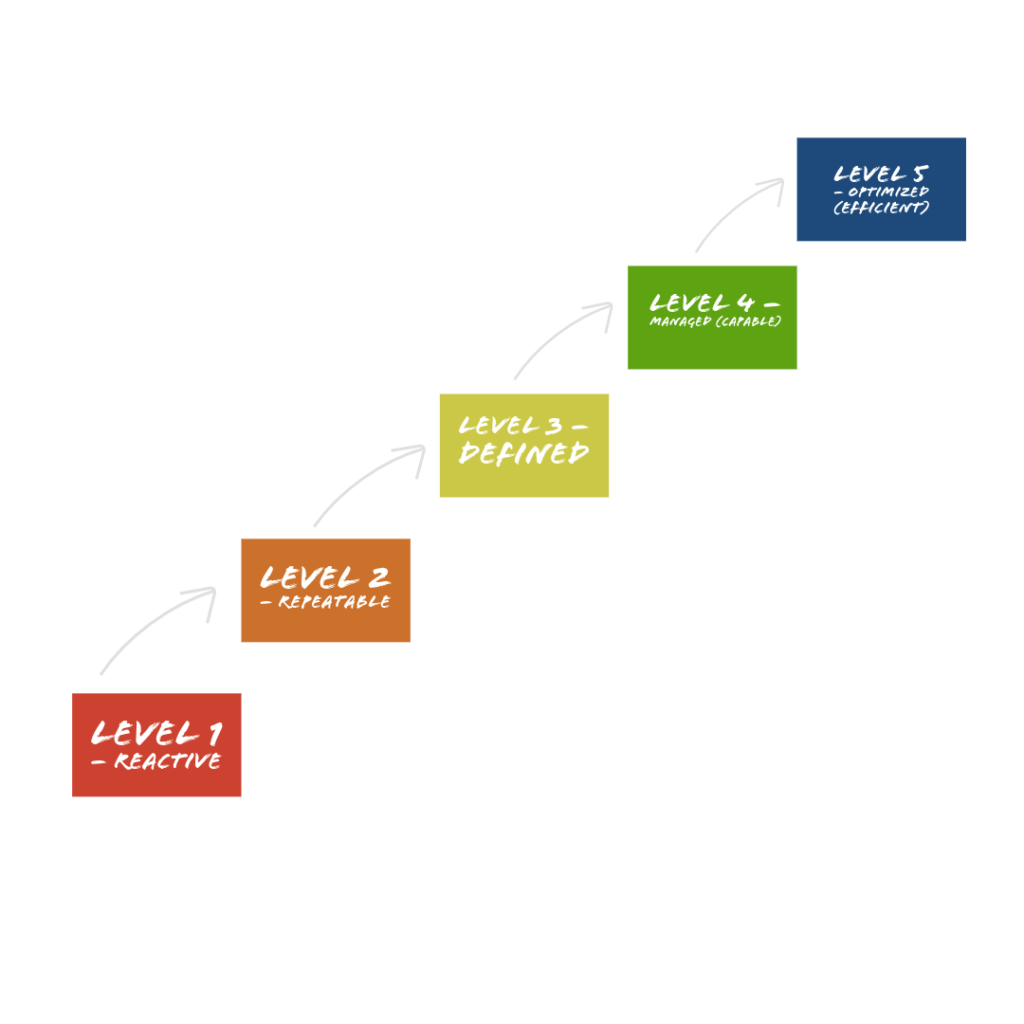
Once you have a language access plan in place , it’s important to keep evolving it for improvement.  But how can you gauge the level of maturity of your language access program?  The Capability Maturity Model, originally developed for the IT sector, can provide a framework for evaluating language access, as well.  

There have been similar efforts to define levels of maturity in the language business (see the localization maturity model).

This structure provides a roadmap your organization can use to make sure high-quality, equitable language access services are effectively being used to serve your communities. Looking at each of the levels described below and evaluating where your organization stands today can provide essential guidance on how to move forward.

language-access-maturity-model-diagram
The same maturity model that applies to IT projects works for Language Access. Where are you?

Level 1 – Reactive

At this stage, requests for translations or interpretation often catch your organization off-guard, leaving you scrambling to comply. You think about translation after the English source has already been published and realize at the last minute that you need language versions. So, you have to make rush requests to Language Service Providers (LSPs), or you rely on Google Translate a lot. 

Your community may be frustrated when they can’t easily access information at the same time as people who speak English fluently. They may not have equal or meaningful access to the services you provide, causing compliance issues for your organization.  Lack of preparedness and structured processes make it difficult to address their concerns.

Identifying that you are in this stage is the first step in improving and evolving your program. Start by determining what content needs to be translated or interpreted and developing processes so that you’re not starting from scratch each time a request comes in.

To help you get started, download our free ebook of language access best practices here. 

Level 2 – Repeatable

At level 2, you’re no longer scrambling to provide access to language services. You know what to do when someone needs translation or interpretation. You have a central point of contact for requests, and people in your organization know who to contact when needs arise. You have a process for requesting services though it might be as simple as an email or phone call. You know what languages are needed, and you have a list of translators, interpreters, and suppliers to make sure those needs are met. Also, there is a clear understanding of what needs to be translated to create meaningful access.

But, at this stage, you’re probably not making the most of technology to streamline your processes, and as a result, they are not as efficient as they could be and you may not be reaching as many members of your community as you could be with high-quality language access materials.

Level 3 – Defined

At this level, you have a formal process for requesting services (i.e. an online portal like LinguistLink.net) and everyone in your organization is familiar with how to use it. Translation and interpretation services are no longer an afterthought – you know the volumes you need, are able to establish a budget and can plan for language access activities early on in a project. 

In addition, you’ve vetted language services providers who can provide the interpretation, translation, and video subtitling services you need. You also understand and can request the right quality assurance steps for your translation projects.  Also, you provide your suppliers with training materials and other documentation. For example, you now have a glossary of commonly translated terms to guide translators and interpreters, helping them to provide a more consistent, high-quality experience for your LEP community.

While you now have processes in place, they are not yet fully optimized, and you may not be fulfilling 100% of the needs of your community.  Also, your entire organization does not yet understand the importance of language access and how to manage services. 

Level 4 – Managed (Capable)

At level 4, language access has become central to all the services provided through the organization. You’ve become proactive and seek to anticipate community needs when possible.  Language access training has been provided to all relevant personnel.

In addition, at this stage, your organization has processes in place to measure performance and make sure the services are of high quality. Also, suppliers demonstrate their abilities through certification or testing. You have implemented systems to track important data on how, when, and what is being translated, and that data is used to improve your program.

Terms and glossaries are managed and adhered to by anyone who supplies services, which means you are confident that the translations and interpretation are appropriate and optimized for your organization and the needs of your community members.

Level 5 – Optimized (Efficient)

At this final level, language access is a process of give and take between your organization and the community you serve. You’re no longer simply providing language access but involving the community in the process to obtain ongoing feedback on how well your efforts resonate with them.

Based on this feedback, you implement changes as needed in the spirit of continuous improvement. You make use of technology to optimize your processes and improve efficiency but always put humans first to make sure language services are culturally and situationally appropriate.

You see the results of your language access program because all community members are freely accessing and participating in any program without worrying about their English abilities.  You can also quantify the results by measuring outcomes like increased participation and increased satisfaction from your non-native English-speaking community members. And lastly, you are in 100% compliance with language access legislation.

The Benefits of Having a Mature Language Access Program

An optimized language access program has a host of additional benefits that follow from increased community engagement.

For example, language access services in healthcare can improve patient outcomes by improving patient understanding.  When non-native English-speaking patients are able to access language services freely, their hospital readmission rates decrease, by 4.4% in one study.

In education, a fully mature language access program improves both student engagement and parental involvement. For example, this Burmese refugee mother initially struggled to help her daughters succeed in their Colorado school due to a lack of language services. Once processes were in place for the school to provide equal access through language services, she became much more involved in her children’s education and their educational outcomes improved.  

For more on how access to language services can make a real-life difference to people with LEP,  read our latest blog post on The Human Faces of Language Access.

Moving Toward Maturity

Moving up to a higher level of language access maturity isn’t just about ticking boxes. It’s about making sure everyone in your community is heard and respected, no matter what language they speak.

It’s also about compliance with the law that states that not providing language access to non-native speakers of English is discriminatory. 

Better processes equip your organization to handle language access requests efficiently, reducing frustration for employees and community members alike. If your organization is at the beginning of its language access journey, we’ve created a free worksheet to help you with your language access planning. Download it here.

Crafting a language access program that truly resonates with everyone may feel like navigating a maze without a map. But you don’t have to do it alone. To chat about how we can help you implement these strategies and build a mature language access program to better serve your multicultural community, contact us here.


The Human Faces of Language Access: People in Your Community Benefitting from Translation or Interpretation

Language access – receiving information and materials in one’s own language — is a human right and critical for helping non-native English speakers thrive in our communities.

Every day, interpreters and translators get to use their language expertise and cultural intelligence to help people resolve legal and financial issues, get past trauma, receive medical support, thrive at school, and take advantage of any other assistance they need.

Here, we share six incredible examples of how language access services have impacted people’s lives.

Stanly: Getting past trauma

Stanly, a many from Poland, was a first responder at the World Trade Center tragedy. Because of his experience and the aftermath, he developed PTSD and began to see a therapist for help.  He did speak English at a basic level, but because the subjects were so personal to him he found it very hard to communicate in English. Once we brought in a bilingual and emotionally intelligent Polish interpreter, Stanly found it much easier to express himself at the emotional level necessary to begin processing his feelings.  Over several months he was able to enjoy the sessions, work through his trauma, begin to heal, and as a result he began to succeed and thrive again at work and in his personal life.

Nirmala: Receiving emergency treatment

Nirmala, and Indian woman, went to the hospital on Christmas day because she had severe abdominal pain. The medical professionals asked many questions, but Nirmala had hard time understanding their questions and explaining her symptoms and situation in English.  Once a Hindi/English interpreter arrived and was able to help her, the doctors properly diagnosed her issues, provided the right treatment and sent her home for Christmas with her family. This interpreter brought emotional intelligence, cultural understanding, and domain expertise as well as linguistic fluency to the situation.

Omid: Treating mental health issues

A teenage refugee from Afghanistan, Omid, was struggling with insomnia, stomach pains, and anxiety. His doctor was unable to get clear details from him in order to help him resolve the mental and physical health issues that were hurting his quality of life.  Omid, whose English is emerging but is not yet fluent, didn’t understand the questions, and felt uncomfortable talking with her because she was an unmarried woman with uncovered hair.  Once a bilingual male interpreter came in, Omid and the doctor were able to communicate clearly through him, and the doctor was able to prescribe medicine to help Omid. Importantly, Omid was able to get clear instructions about how to take the medicine.

Giang: Resolving school truancy

Giang, a Vietnamese speaking child, skipped school enough times that the school sent the parents an email message to ask about his well-being.  However, the parents didn’t understand the automatic email and phone messages, and were unable to connect with the details of the absences, the consequences of them, and who to talk with to resolve them. Once the language access coordinator got involved, the parents received communications in Vietnamese and were able to understand and resolve the absences and get their child back in school.

Raquel: Empowering entrepreneurship

Raquel, a young woman from Colombia, began a custodial services business in the United States, and needed a loan for equipment and banking support for payments and payroll processing.  The bank she chose provided her with all materials in Spanish, and the banker was a Spanish-speaker himself. Raquel was able to set up the accounts and finances that she needed for his business to thrive.

Anton: Resolving a bank dispute

A Ukrainian man named Anton was involved in a dispute with their bank. The bank was saying that Anton was behind mortgage payments, but he insisted he made payments as scheduled. It turned out that the issue started when Anton changed jobs and started working on a commercial fishing boat. His new job was seasonal, meaning there were months when he would be out in the sea and months when he didn’t work at all. His paychecks were quite sizable for the time he spent working but he didn’t have any income off season. He was overpaying his mortgage when he had income but when he didn’t receive paychecks, he was not making any payments towards the mortgage. He didn’t understand that the extra money was not covering the mortgage for the months he didn’t make any payments. Once an interpreter got involved, the 2 parties were able to clear up the situation and create a good solution.  They opened a savings account, connected it with Anton’s mortgage account, and set up automatic transfers in an agreed amount.

To chat with us about how language service can help your organization better serve your community, contact us here. 

5 Things You Can Do to Include Families with Limited English Speaking Abilities

If you work in education, governments, health care, non-profits, or any agency that helps the community, you probably ask yourselves how to be more inclusive. A simple way to make a huge difference for people is to provide language access for families who have limited English speaking abilities.

Did you know a lot of our community members feel shame about their English speaking abilities? It’s true. And this shame results in many people not engaging with available services and support.

Did you know that the U.S. does not have an official language? We happen to speak a lot of English here, but it isn’t required. In fact, the US is the 5th most linguistically diverse country in the world! Also, Title VI of the Civil Rights Act of 1964 requires recipients of Federal financial assistance to take reasonable steps to make their programs, services, and activities accessible by eligible persons with limited English proficiency.

So how do we help community members overcome those feelings of shame and make sure they know they can engage with you regardless of the language they speak.

Here are a few things you can do that don’t have to cost a fortune.

Translate essential materials for accessing your service

If you identify even a few documents, brochures, application forms, etc. that you can translate for communities, that can help a lot. In fact, if you take federal funding in anyway, you may be required to provide meaningful access to your service. Providing materials in the common languages spoken in your communities can help people feel welcome.

Schedule an interpreter for meetings (even virtual ones)

It’s easier than ever to add an interpreter in a meeting! Most virtual meeting systems (like zoom) support adding interpreters. Having interpreters available can provide both the language services and can serve as a cultural broker to ensure that you’re bridging the language gap.

Need to Schedule Someone Now–Check out LinguistLink!

Add subtitles to video content

Providing accurate subtitles is a great way to show inclusiveness. You can easily add subtitles to your training and marketing videos. It’s supported on most video platforms (like youtube!) It’s a great idea to add English (or the source language) as well as the translated language. Many of your community members prefer to read the subtitles when watching videos.

Include option to provide interpretation on a hotline

If you have a telephone hotline, it’s important to have a plan for when someone calls the hotline who doesn’t speak English. Having a partner with interpreters ready to conference in can smoothly enable services.

Yes, Mindlink can help with this 😀

Create human translated web pages

If you have a website — providing pages in the languages spoken in the community that is translated by human makes a big difference in showing the public you have an inclusive and welcoming organization. Just translated a few core pages can make a huge difference.

Yes, Mindlink can help with this too! 😀

Let’s go beyond just including, and strive to engage with community members regardless of their English speaking ability.

Schedule a Free 15 min Consultation with Stacey

I would love to talk with you about what you’re currently doing and give some ideas for some things you can put into place to show your commitment to Equity, Inclusion and Engagement!

How to Create a Terminology and Glossary Lists

Creating a terminology and glossary list is an investment in time that will pay off quickly. If you plan ahead and create a process for keeping the list active, you can enable high quality transaltions and ensure all of your communication from your organization is consistent and clear for your end-users.

The following are some of the steps we recommend for creating and maintaining your terminology and glossary lists:

Gather Terms

This can be a tricky step. We sometimes are so accustomed to the terminology in our industry, we don’t even think about it. But when communicating with our communities, we have to get into their heads to make sure they will understand our message. Not only do we need to think about the end users, we have to make sure the people doing the translations completely understand the context of a phrase. Using some guidelines to create a term list can help. For example, you can include commonly used terms, particularly complicated ideas, and industry-specific acronymns. The list may include single words, acronymns, or short phrases.

You can also ask your translation provider to perform a “terminology extraction” from previous translations. (Yes! Mindlink can do this for you).

Terminology List Template

Need a format for your list. Download it here to get started.

Translate the Terms

Once you have the list, you can send it to professional translators. We recommend parallel translations where two translators work on the same text at the same time. Where there are discrepencies, the translators can discuss the best way to convey the idea.

Back Translation

After the translation has been completed, you can have “back translation” performed. “Back translation ” is a quality step where the target language is translated BACK into English. Then you can compare the back translation against the English source term. You might catch some differences (for example, a word like “plant” could be a verb or a noun. Back translation would catch if the translator picked the wrong version).

Community Input

Another helpful step is to ask members who are part of the community you are trying to reach to review the terms and highlight any confusing or unclear terms. The community might bring perspectives on how the language is used in your area and provide valuable feedback.

Publish the List

Once you are satisfied with the quality of the terms, you should publish the list somewhere that can be accessed by content creators and the translation team.

Repeat

The last step “repeat” is a very important one! At some interval (maybe every year) do a “term inventory”. Are there terms that should be added or updated? Maybe some terms should no longer be used because it is found that they are not using inclusive language (i.e. “whitelisting“).

Did you know Mindlink has a Terms Database “TermsBase” that is available to help with this process? It’s still in beta version (and we’re not set on the name — any suggestions??). Check it out!

Is Your Language Access Workflow Ready for Parent-Teacher Conferences?

Parent-Teacher Conferences. If you work in a school with students who are from families with limited English abilities, this can be a stressful event even in a normal year.

However, we’re not in a normal year. We’re in the middle of a pandemic which has impacted our schools in so many ways. So, we’ve been finding new solutions to stay connected as a school community.

That leaves us thinking about how we’re going to support translation and interpretation, especially for Parent-Teacher Conferences.

Here are a few tips we thought of that might help:

1. Use Local Interpreters for Parent-Teacher Conferences

Work with a local vendor to connect with interpreters in your community (if possible). Finding local interpreters has the same effect as “shopping local“. You help local businesses and you get the benefit of working with people who live in the same communities as the families you serve.

2. Use a Scheduling Tool

Use a scheduling tool to make sure everyone is on the same page. If you try to coordinate and schedule with email, phone, or text messaging, it’s a quick way to go crazy. A simple google form helps. Although, did you know our system “LinguistLink” is especially designed for Language Access in schools?

Scheduling with LinguistLink.net for Free!

LinguistLink.net gives you a central place for all your language access needs.

Use LinguistLink.net for the first THREE months with no RISK.

Sign up here and we’ll get you started.

3. Confirm the Appointment

Once you schedule the interpreter, provide them with the parent’s phone number and ask them to confirm the appointment the day before with the family.

4. Use the Right Platform

If you have a choice, choose a simple video platform for the meeting. Many families do not have access to a computer or internet and will probably connect via their mobile phone, so don’t be afraid to schedule a three-way phone call.

5. Use Best Practices for Interpretation

Make sure you follow best practices for interpretation. For example, during the meeting — address the parent directly, but allow time for the interpreter to relay the message.

Applying these ideas will help you communicate information for Parent Teacher Conferences effectively with families regardless of their English abilities.

If you would like to discuss or learn more about any of these tips, I would love to hear from you! Shoot me an email directly: stacey@mindlinkresources.com or Contact Us.

Learn more about Language Access

How to hold Inclusive Virtual Back-to-School Meetings

Who knew how much could change in a year? With classrooms going remote throughout the country, educators are faced with having to figure out what may have been seen as impossible, like holding inclusive virtual back-to-school meetings. But, we are in a season of making the impossible, possible.

Before scheduling a meeting for your diverse school or district, there are some things to consider to make sure your meeting is inclusive regardless of English abilities.

Hire Experienced Simultaneous Interpreters

Although many interpreters may not have experience with virtual interpretation (we’re all learning in this new world!). There are interpreters who have experience providing simultaneous interpretation. This is a specialized skill, so it’s important to ask someone if they are comfortable with this task. If they aren’t comfortable providing interpretation in a meeting in person, they may struggle online.

Remember -- for meetings over two hours, 
plan on having two interpreters!

Provide a secondary audio channel

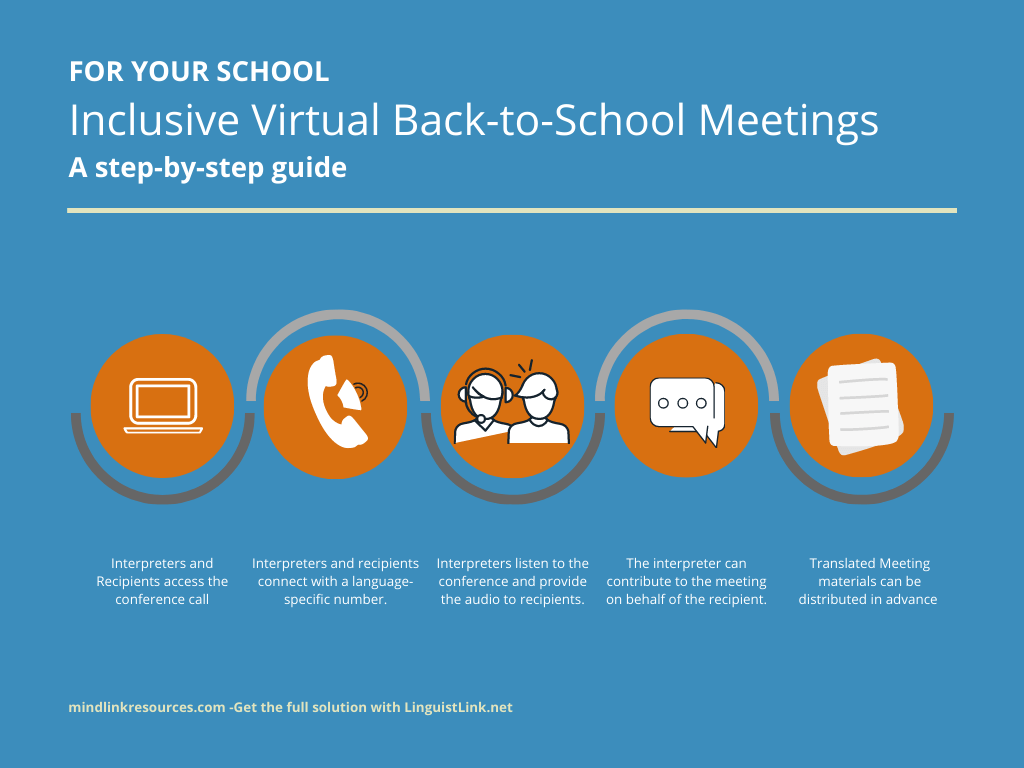
Once you have the interpreters hired, you have to make sure the right set up is in place for the call. Some conferencing tools (like zoom) have features to enable interpretation. However, they can be costly and complex. You may already have access to everything you need! Check out this infographic that will walk you through an effective set up for holding inclusive virtual back-to-school meetings.

Order a Linguist Conference Line for Your Next Virtual Meeting

Try it for FREE

Provide materials to the interpreters in advance

You can do a lot to help Interpreters prepare for the meeting. If there is an agenda, slides, or other materials, it’s great to share that a day or two before the meeting is scheduled.

Provide Translated Materials

You can really help facilitate inclusive communication by providing agendas, slides, and support materials in their language.

Inform Speakers that there will be Interpretation

If you have multiple speakers in a meeting, make sure every speaker realizes there will be interpretation provided. They should ensure their talk, slides, etc. are culturally appropriate and inclusive. Also, they can be prepared for speaking a little slower, pausing when needed, clarifying some points for the interpreter as they go along.

Give room for input from the limited English speakers in the meeting

Some meetings allow for comments/questions from the audience. Make sure to instruct participants on how to communicate their questions and input through their interpreter.

Let everyone know that you value their contribution

It goes without saying that families, regardless of their English proficiency, care about their kids and want to contribute. By providing interpretation and allowing space for participation enriches the whole school community.

It’s a new world on how we accomplish inclusive virtual back-to-school meetings, but keeping the big picture in mind can build a community that will contribute solutions now and going forward!

“It always seems impossible until it’s done.”

-Nelson Mandela